Chassis Safety
Suspension Wear Signs Every Driver Should Recognize
Suspension problems rarely announce themselves with a single obvious failure. Wear accumulates gradually — a bushing stiffens, a shock loses damping, a ball joint develops play — until handling feels vague and tires show uneven patterns. Recognizing early signals keeps repairs manageable and prevents a comfort issue from becoming a safety risk on wet pavement or during emergency maneuvers.
Sounds That Point to Chassis Movement
Clunks over speed bumps or when turning into driveways often indicate loose bushings or worn stabilizer links. A metallic rattle on rough roads may come from sway bar brackets. Clicking during slow turns can trace to outer CV joints, but similar noises originate from ball joints with excess clearance. Recording when the sound occurs helps technicians reproduce the fault on a lift.
Steering Feel and Road Feedback
Healthy suspension maintains tire contact with the road surface. When shocks fade, the body oscillates after bumps — a floating sensation at highway speed. Worn inner tie rod ends create on-center slack: a brief dead zone before the wheels respond. Pulling under braking may combine alignment issues with seized caliper slides, but suspension geometry out of spec amplifies the effect.
Nose dive under moderate braking is normal; excessive pitch suggests front damping weakness. Rear squat during acceleration in rear-wheel-drive vehicles can indicate worn rear shocks or bushings allowing axle shift.
Reading Tire Wear as a Diagnostic Tool
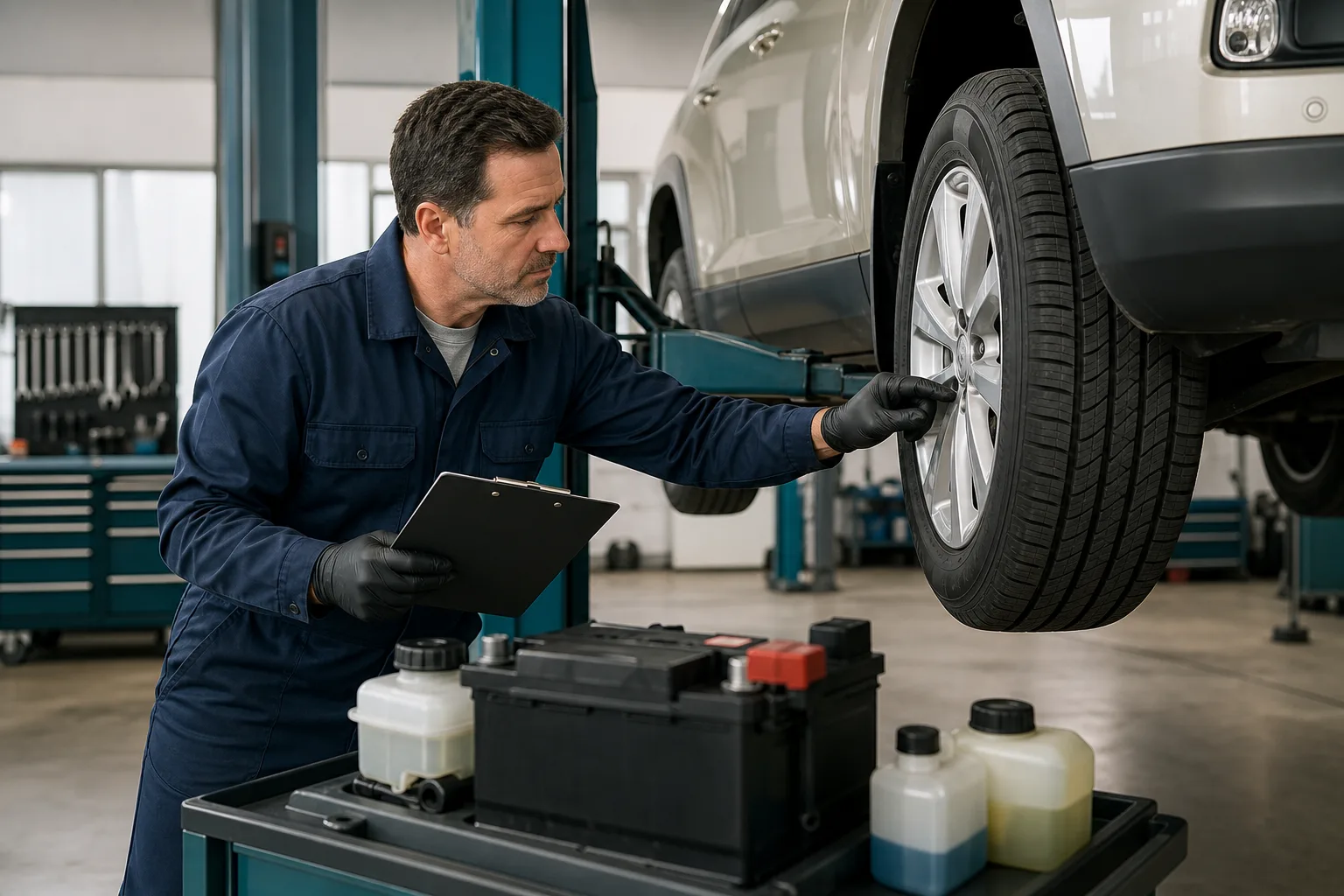
Tire shoulders wearing faster than centers may reflect under-inflation or aggressive cornering, but feathered edges across a single edge often signal alignment drift from worn control arm bushings. Cupping — scalloped dips around the tread — frequently links to failed shock absorbers allowing wheel hop. Inner edge wear on front tires can appear with camber misalignment caused by sagging springs or bent components after impact.
- Rotate tires on schedule but investigate patterns before blaming rotation alone
- Compare wear side-to-side; asymmetry suggests suspension or alignment faults
- Document wear after pothole impacts — hidden bends may not show visually
Components That Fail Most Often
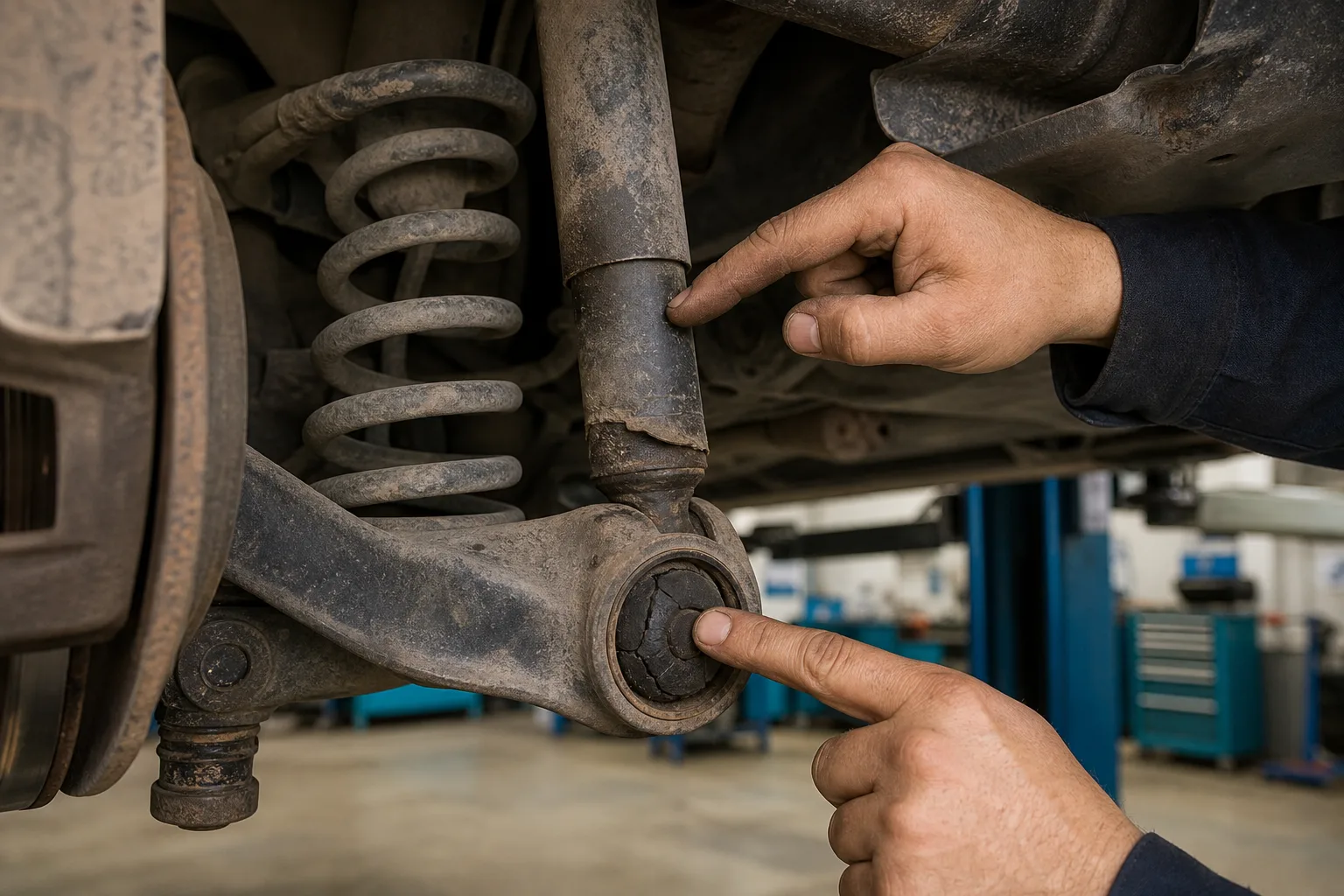
Struts and shock absorbers lose damping gradually — many drivers adapt unconsciously until a passenger comments on ride harshness. Control arm bushings crack and separate in heat cycles common in Florida. Ball joints develop play that fails safety inspections. Stabilizer end links corrode and rattle long before complete separation. Each component plays a role in keeping wheels aligned under load.
When Wear Becomes a Safety Priority
Excessive ball joint play, separated bushings allowing wheel camber shift, and broken springs require immediate attention. Delaying repair increases stopping distances and reduces stability during lane changes. If you notice sudden changes after hitting debris, schedule an inspection even when no visible damage appears — structural bends hide behind plastic shields.
At macrobiotx, chassis inspections combine visual checks, dial indicator measurements, and road testing. We explain which parts are urgent, which can wait, and how replacements restore predictable handling — without selling unnecessary component swaps.