Drivetrain Care
When Transmission Fluid Service Actually Matters
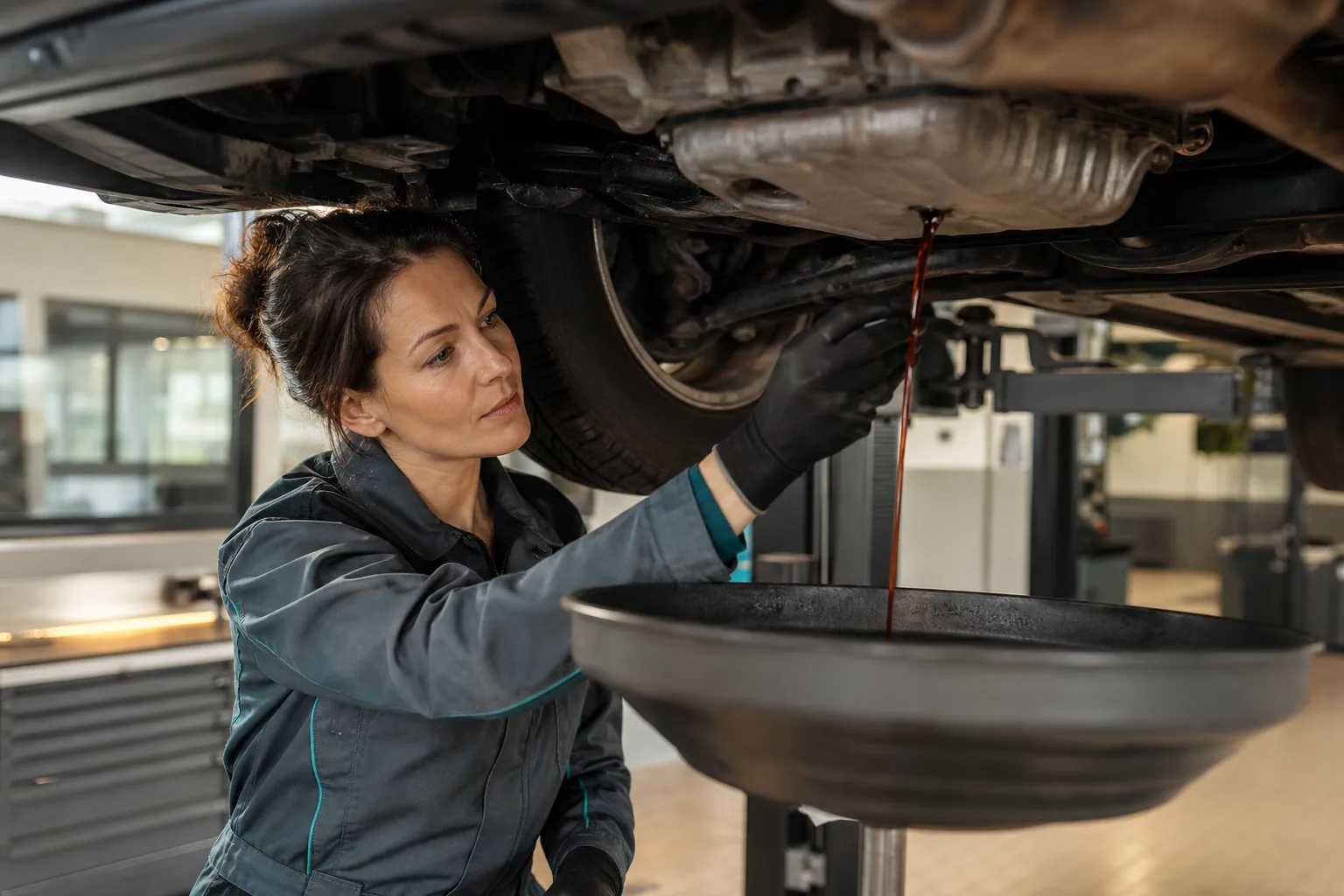
Transmission fluid discussions often turn into arguments about color — dark means change it, red means fine. In reality, fluid appearance is one data point among many. Heat exposure, towing habits, stop-and-go commuting, and internal wear particles tell a more reliable story than a dipstick glance alone.
Why Mileage Charts Are Incomplete
Manufacturer intervals assume average driving profiles. A sedan used mostly on highways experiences far lower thermal stress than a SUV towing a trailer through South Florida summers. Severe-duty definitions often include urban traffic, mountainous routes, and commercial use — categories many daily drivers fit without realizing it.
Following a generic mileage rule without context can mean changing fluid too late — or flushing a healthy unit unnecessarily. Measured analysis bridges that gap.
What Fluid Condition Really Indicates
Healthy automatic transmission fluid lubricates clutches, carries heat away from the torque converter, and maintains hydraulic pressure for shift solenoids. As additives deplete, shift quality changes — delayed engagement, harsh upshifts, or flare between gears. Manual gearboxes rely on fluid for synchronizer protection; neglect produces grinding and accelerated wear on bearings.
- Burnt odor suggests prolonged overheating
- Metallic glitter may indicate internal component wear
- Foam or milky appearance can point to cooler contamination
- Rising operating temperature under normal loads signals fluid breakdown
Drain-and-Fill Versus Full Exchange
A standard pan drain typically replaces only a portion of total fluid volume. Machine-assisted exchanges move more fluid but must match manufacturer procedures — wrong pressure or incorrect fluid specification can cause shift issues on sensitive units. Some high-mileage transmissions benefit from gradual fluid renewal rather than aggressive flushing if wear debris is already present.
We evaluate mileage, service history, and current behavior before recommending a method. The right approach protects the gearbox instead of shocking it.
Driving Patterns That Accelerate Wear
Frequent short trips prevent full fluid warm-up, increasing moisture retention. Heavy loads raise converter temperatures. Aggressive acceleration generates heat in clutch packs. Fleet vehicles and rideshare drivers often exceed nominal interval assumptions within a few years. Recognizing your pattern helps set a realistic maintenance schedule with your technician.
Planning Service With Confidence
Bring your maintenance records and describe any shift anomalies. A road test combined with fluid inspection at macrobiotx clarifies whether service is preventive, corrective, or unnecessary for now. The objective is predictable gearbox behavior — not fluid changes on autopilot.